Signs of a Hidden Water Leak Under Your Slab
Warm floors, spiking water bills, and the sound of running water with everything off are the top signs of a hidden water leak under your slab in Lakeland, FL.

The earliest signs of a hidden water leak under your slab in Lakeland are a water bill that jumps 20-40% with no change in habits, a warm spot on the floor that never cools, and the faint sound of running water when every fixture is off. Any one of those three is enough to call for detection - waiting usually turns a $400 repair into a $4,000 foundation problem. Below we cover the full symptom list, how we pinpoint the leak without tearing up your house, what repair actually costs in 2026, and when it's time to stop guessing and call us.
What Is a Slab Leak?
A slab leak is a failure in a pressurized water line or drain line that runs beneath the concrete foundation of your home. The pipe is buried in or under the slab, so the water has nowhere to go but up through the concrete or sideways into the soil. That's why slab leaks are so destructive - you often don't see the water until it has already done weeks of damage.
In Lakeland, most of the homes we open up were built between 1950 and 1990, and the culprit is almost always copper supply lines that have been sitting in Florida's slightly acidic soil for 40-plus years. Copper thins from the outside in. By the time it pinholes, the pipe wall is paper-thin along a whole section, not just at the leak point.
Why Lakeland Homes Get Slab Leaks
Lakeland sits on a mix of sandy soil and clay, and that combination is hard on buried pipe. Sandy soil drains fast, so the pipe is constantly wet and dry, wet and dry. Clay holds water against the pipe for days after a rain. Both cycles stress the metal.
Three other local factors show up in almost every slab leak we diagnose:
- Age of the copper. Homes built before 1990 are the highest risk. We see the most failures in the older blocks of plumbing in Dixieland Lakeland, where 1920s-1950s bungalows still have original or first-replacement copper under the floor.
- Water chemistry. Lakeland's municipal water is on the hard side, and hardness scale builds up inside the pipe. Scale doesn't cause the leak, but it hides the corrosion until the wall gives out.
- Ground movement. Central Florida's soil shifts with our wet and dry seasons. A pipe that was fine in April can crack in October when the ground shrinks.
If your home is in one of the older neighborhoods near downtown or around Lake Morton, this is worth reading carefully - you're in the highest-risk group in the city.
Signs of a Hidden Water Leak Under Your Slab in Lakeland
The signs of a hidden water leak under your slab in Lakeland fall into three groups: what you hear, what you feel, and what shows up on your bill or your floor. Check all three before you call anyone.
What you hear
- Running water with everything off. Shut off every faucet, the ice maker, and the irrigation. Stand still in the quietest room. If you hear a hiss or a steady trickle, that's pressurized water escaping.
- A water meter that never stops. Turn off the main shut-off valve at the house. If the meter's low-flow dial is still spinning, the leak is between the meter and the house - or under the slab.
What you feel
- Warm spots on the floor. This is the single most reliable sign of a hot-water slab leak. The hot line is under pressure, and the heat conducts up through the concrete. If one tile is noticeably warmer than the ones around it, mark it with tape and call us.
- Soft or spongy flooring. Laminate and engineered wood cup and lift when moisture wicks up from below. Tile may feel loose or sound hollow when you tap it.
- Cracks in the slab or tile. A leak erodes the soil under the foundation, and the slab loses support. Hairline cracks that appear in a straight line are a warning.
What shows up on paper
- A high water bill. A high water bill from a slab leak in Lakeland, Florida typically means 2,000-6,000 extra gallons a month. A pinhole leak the size of a pencil tip wastes about 8,000 gallons a month.
- Mildew smell or musty air. Water under the slab feeds mold in the carpet pad and baseboards. If one room smells damp and the others don't, that's your room.
- Unexplained damp baseboards. Paint peeling at the bottom of a wall, or a baseboard that's cool and dark to the touch, points to water rising from below.
How to Detect a Slab Leak in Lakeland, Florida
How to detect a slab leak in Lakeland, Florida comes down to three tools: the meter test, an acoustic listen, and electronic leak location. You can do the first one yourself in ten minutes. The other two are what we bring to the job.
Here's the meter test, step by step:
- Shut off every water-using appliance - washer, dishwasher, ice maker, irrigation, water heater.
- Find your meter box, usually near the curb. Lift the lid and look at the small triangular dial.
- If the triangle is moving, water is passing through the meter. Watch it for two full minutes.
- Now close the main shut-off valve where the line enters the house. If the triangle stops, the leak is inside the house. If it keeps spinning, the leak is on the service line between the meter and the house.
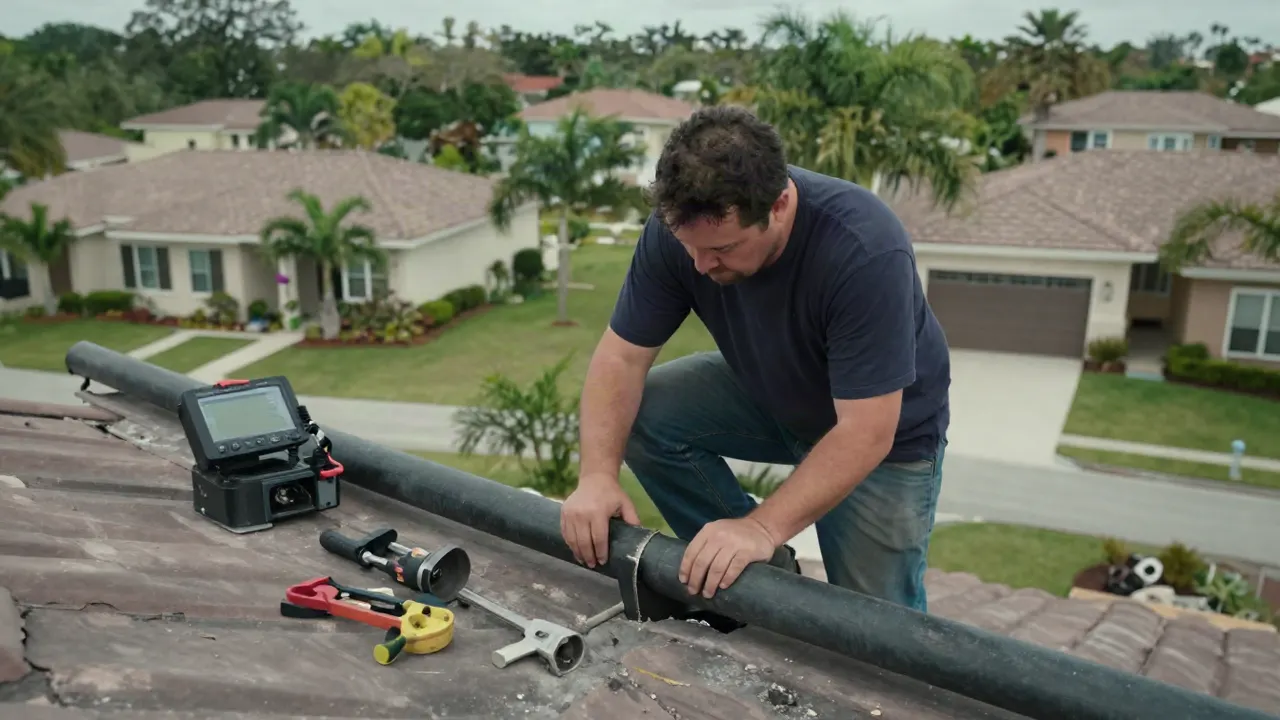
That test tells you a leak exists. It doesn't tell you where. For that, we use acoustic listening equipment to hear the water through the concrete, and a line-tracing tool to map exactly which pipe is leaking. On a typical Lakeland home we pinpoint the leak to within about six inches before we ever touch the floor. That's the difference between one small access hole and a trench across your living room.
If you want the leak located without guesswork, our slab leak detection Lakeland service is built for exactly this - we find it, mark it, and give you the repair options in plain numbers.
Slab Leak Repair Options in Lakeland FL
Slab leak repair options in Lakeland FL come down to three real choices, and the right one depends on the age of your pipe, how many leaks you've already had, and whether the pipe is under a finished floor.
Spot repair
We open a small section of slab, cut out the failed section of pipe, and replace it with new copper or PEX. This is the cheapest option and the right call for a single leak in an otherwise healthy line. Expect one to three days of work and a patch in the floor that a flooring contractor can finish.
Reroute
Instead of breaking concrete, we abandon the leaking section under the slab and run a new line overhead through the attic or along the walls. No concrete is broken, the floor stays intact, and the repair is permanent. This is our most common recommendation for 1960s-1980s Lakeland homes where the copper is failing in more than one place.
Whole-home repiping
When we find three or more leaks, or the pipe wall is thin throughout, patching is throwing money at a losing battle. Whole-home repiping replaces every supply line at once. It costs more up front, but you stop paying for leak repairs every 18 months. You can see our full repiping Lakeland FL options if you're at that decision point.
What it costs in 2026
Typical 2026 pricing in the Lakeland area runs like this: leak detection $250-$450, spot repair $600-$1,500, reroute $1,800-$4,000, and whole-home repiping $4,500-$12,000 depending on square footage and how many fixtures you have. We give you the number before we start, and it doesn't change unless we find something we couldn't see on the camera.
Common Mistakes Homeowners Make
The most expensive mistake we see is waiting. A slab leak doesn't get smaller, and every week it runs, it erodes more soil under the foundation and feeds more mold into the carpet pad.
Four others worth naming:
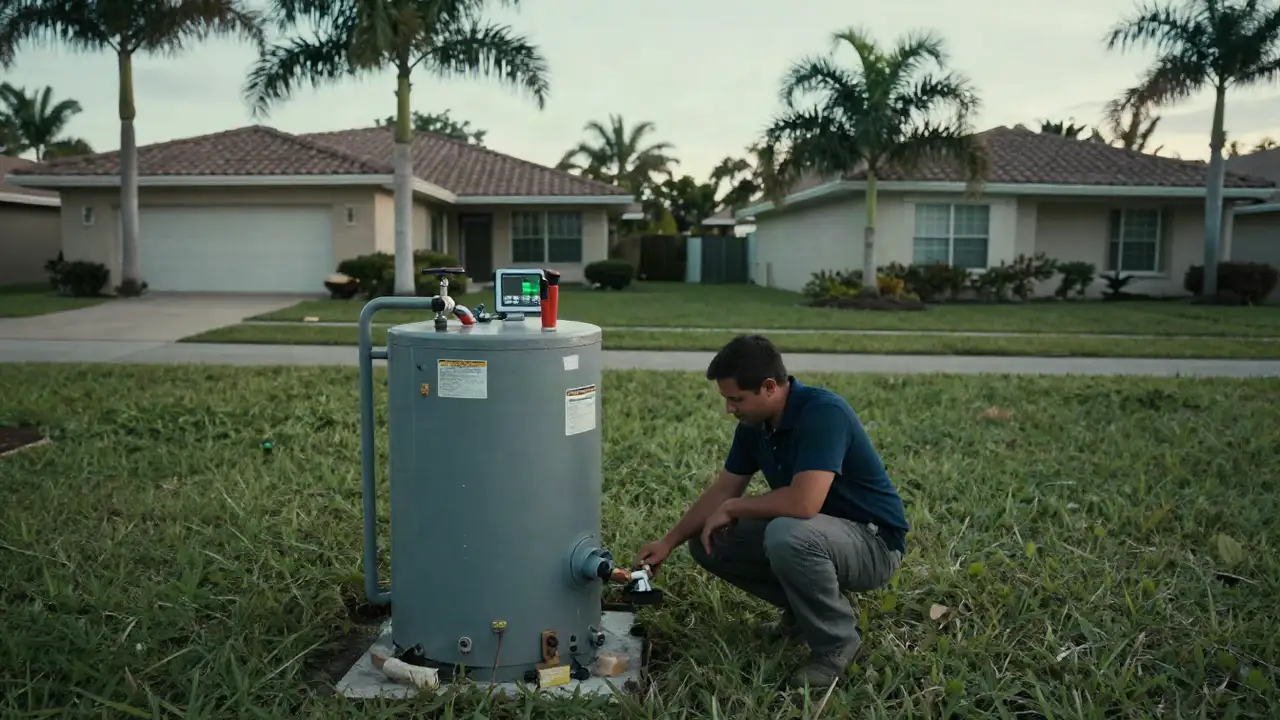
- Assuming it's the water heater. A puddle near the water heater gets blamed on the tank when the real leak is under the slab two feet away. We test both before we quote anything.
- Shutting off the water and forgetting about it. Turning off the main stops the damage, but the leak is still there and the pipe is still failing. It's a pause button, not a fix.
- Hiring the cheapest jackhammer quote. Anyone can break concrete. Finding the leak first is what keeps the hole small. If a contractor wants to open the floor before locating the leak, get a second opinion.
- Ignoring the second leak. Once copper starts pinhole-leaking in one spot, it's usually failing in three or four. Fixing one and stopping is how homeowners end up doing this again next spring.
When to Call a Professional
Call a professional the moment you confirm water is moving through the meter with everything off - that's not a wait-and-see situation. The same goes for a warm spot on the floor, a water bill that jumped more than 20% in one cycle, or any crack in the slab that appeared in the last few months.
At Lakeland Swancrest Plumbing, we handle slab leak detection and repair across the city, from downtown to the south side. We locate the leak first, show you where it is, and give you the repair options with real numbers. If a reroute will save your floor, we'll tell you. If a spot repair is all you need, we'll tell you that too. You can see the full range of what we do on our plumbing services in Lakeland, Florida page, or just call and describe what you're seeing.
Frequently Asked Questions
What are signs of a slab leak in Lakeland FL?
The top signs are a water bill 20-40% higher than normal, a warm spot on the floor, the sound of running water with all fixtures off, and a water meter that keeps spinning after you shut the main valve. Damp baseboards and a musty smell in one room are also common.
How do I know if I have a hidden water leak in Lakeland, Florida?
Shut off every water user in the house and watch your meter's low-flow dial for two minutes. If it moves, you have a leak. Then close the main shut-off valve - if the dial stops, the leak is inside the house, likely under the slab.
Can a slab leak be fixed without breaking concrete in Lakeland FL?
Yes. A reroute abandons the leaking pipe under the slab and runs a new line through the attic or walls, so no concrete is broken. It's permanent and it's our most common fix for homes with failing copper. Spot repairs do require a small access hole.
Does homeowners insurance cover slab leaks in Lakeland, Florida?
Most Florida policies cover the water damage a slab leak causes - soaked flooring, mold remediation, damaged drywall - but not the pipe repair itself. That's considered wear and tear. Read your policy or call your adjuster before you file.
How much does slab leak repair cost in Lakeland FL?
In 2026, detection runs $250-$450, a spot repair $600-$1,500, a reroute $1,800-$4,000, and whole-home repiping $4,500-$12,000. The right number depends on where the leak is and how much pipe has to be replaced.
Get Help with Plumbing in Lakeland
If you've got a warm spot on the floor, a meter that won't stop, or a water bill that doesn't make sense, we'll find the leak and give you the fix. Call Lakeland Swancrest Plumbing at (863) 445-7111 and we'll get a technician out to pinpoint it.