Preparing your plumbing for Lakeland's summer heat
Lakeland summers push water temperatures past 100°F and spike irrigation demand. Here's how to prep your pipes, water heater, and outdoor lines before the heat hits.
Preparing your plumbing for Lakeland's summer heat means flushing the water heater, testing every outdoor spigot and irrigation zone, and checking static water pressure before daily highs sit above 95°F. Do that work in April or May, and you avoid the three failures we get called for most in June and July: a tank that pops and leaks, a hose bib that shears off in the wall, and a pressure spike that blows a supply line while you are at work.
Lakeland's summer is not like a Florida beach town's summer. We sit inland, we hit 96°F to 98°F on a regular July afternoon, and the afternoon thunderstorms dump an inch of rain in 40 minutes. That combination - heat, then sudden water - is what breaks plumbing. This guide walks through the full checklist we run on homes from plumbing Lakeland FL homeowners call us about, plus the specific problems we see in older neighborhoods and what it costs to fix them in 2026.
Why Lakeland's summer heat stresses plumbing
Lakeland's summer heat stresses plumbing because it raises the temperature of the water sitting in your pipes and your water heater tank, expands the metal and PVC, and drives irrigation demand up at the exact time your supply lines are already working hardest. A pipe that sees 68°F water in February sees 85°F to 90°F water in July. That 20-degree swing does not sound like much until you remember that every fitting, every threaded joint, and every length of CPVC expands and contracts with it.
The second stressor is demand. A Lakeland household with a half-acre lawn runs its irrigation system two to three times a week in summer, sometimes daily during a dry stretch. That is 3,000 to 5,000 extra gallons a week moving through your meter, your main line, and your backflow preventer. Any weak point in that chain - a hairline crack in a hose bib, a failing pressure regulator, a corroded galvanized nipple - picks summer to let go.
And the third stressor is the water heater. Incoming water in Lakeland can hit 78°F to 82°F in August. Your tank does not have to work as hard to heat it, but the sediment at the bottom of the tank bakes harder, and the thermal expansion inside the tank is more aggressive. That is why we see more tank failures in July and August than in any other two-month window.
How do I prepare my plumbing for summer in Lakeland FL?
You prepare your plumbing for summer in Lakeland FL by working through six checks in April and May, before the first sustained 95°F week. None of them take more than an hour, and together they prevent the majority of summer plumbing failures we see.
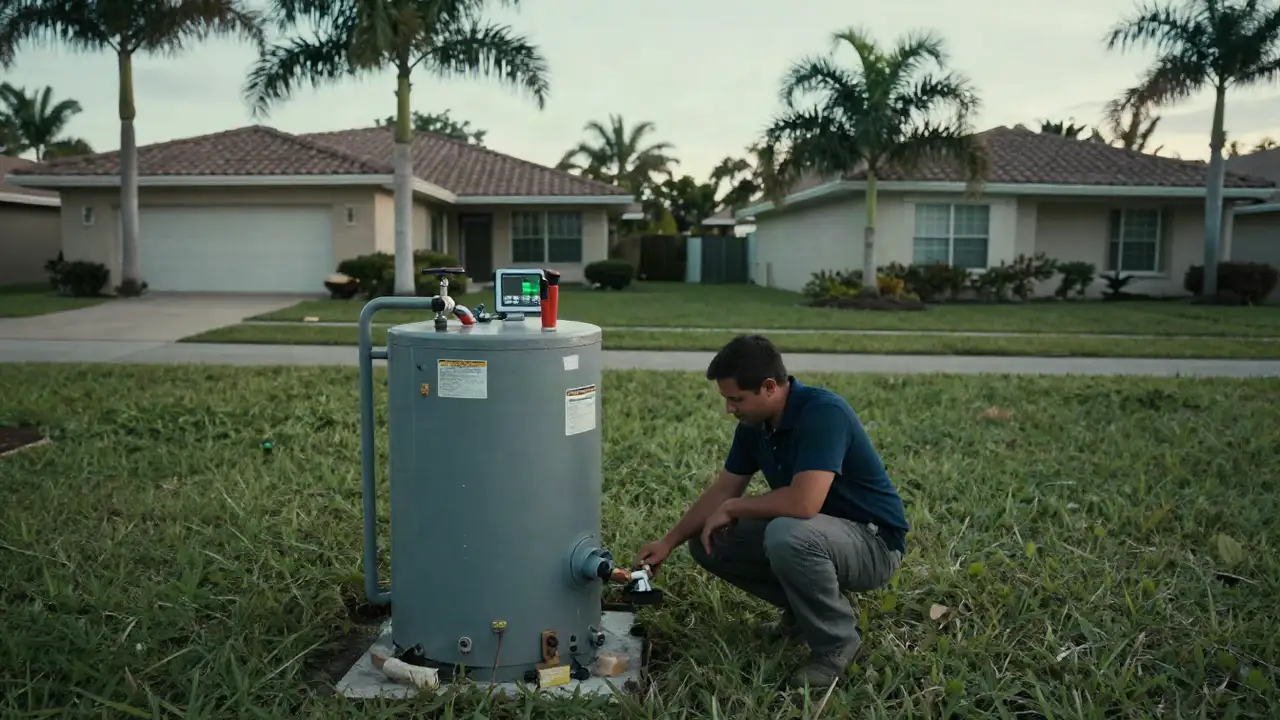
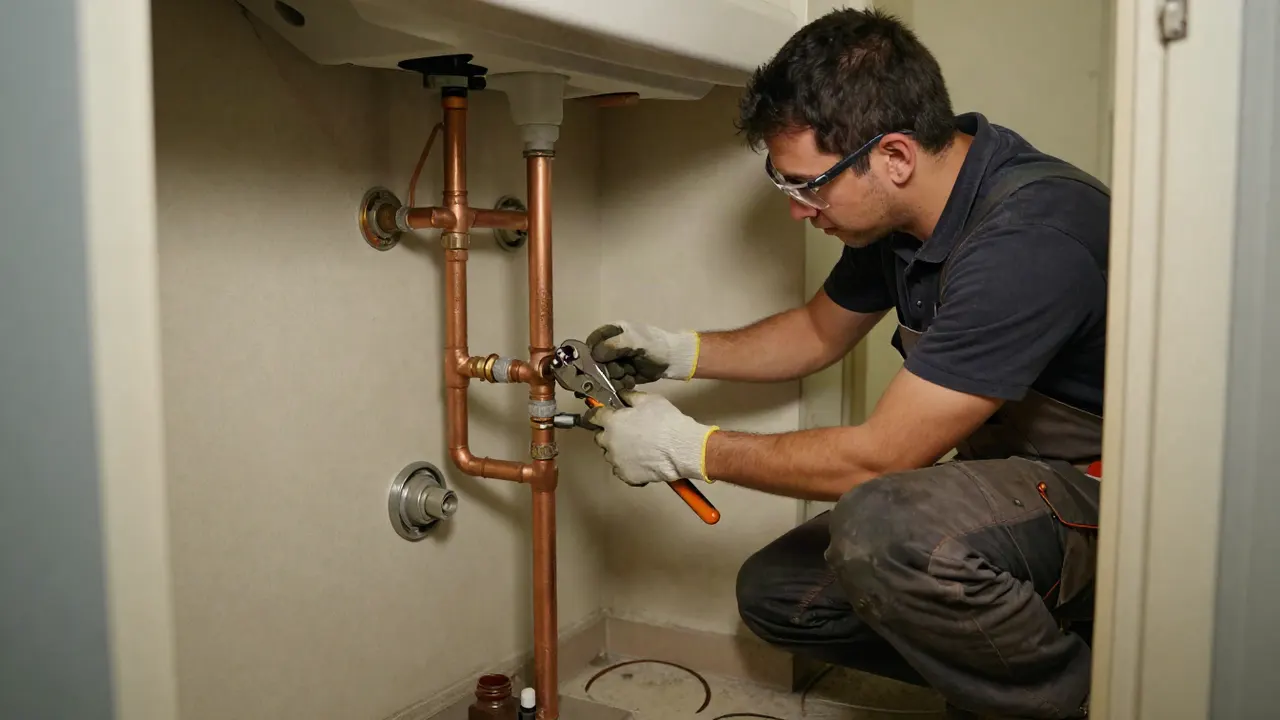
- Flush the water heater. Drain 3 to 5 gallons from the bottom valve until the water runs clear. If you have never done it, or the tank is over 8 years old, have a plumber do it - the drain valve can snap on an old tank.
- Test every outdoor spigot. Turn each one on full, then off. Listen for a hiss behind the wall. A hiss means the packing or the pipe behind the siding is already compromised.
- Walk the irrigation zones. Run each zone for 5 minutes and look for geysers, soggy patches, and heads that are not popping up. A broken head wastes 15 to 20 gallons a minute.
- Check static water pressure. Screw a $12 gauge onto a hose bib and read it with no fixtures running. Anything above 80 PSI needs a pressure-reducing valve.
- Inspect the water heater pan and T&P valve. A dry pan and a dry discharge pipe mean the tank is holding. Any moisture means it is not.
- Look under every sink. Summer humidity plus a slow cabinet leak equals rot and mold by August.
If you would rather have us run the whole list, we do a full summer plumbing maintenance Lakeland, Florida walkthrough that covers all six items plus a camera look at your main drain line.
Flush your water heater before the first 95°F week
Flushing your water heater before the first 95°F week is the single highest-value item on the list. Lakeland's water carries dissolved calcium and magnesium, and both settle out as sediment when the tank heats. By the end of a year, a 50-gallon tank can hold 2 to 4 inches of scale on the bottom.
That scale does two things. It insulates the burner from the water, so the tank runs longer and hotter to hit the same setpoint. And it traps water against the steel floor of the tank, which is where pinhole leaks start. A tank that gets flushed every 12 months will outlast one that never gets flushed by 3 to 5 years.
If your tank is already making a popping or rumbling sound when it heats, the sediment layer is thick enough that the water underneath is boiling. That is a tank on borrowed time. We handle water heater repair Lakeland FL calls every week in summer where the fix is a flush and a new anode rod, and we handle the ones where the tank floor is already gone. If yours is past 10 years old and popping, plan for a replacement before the tank decides for you.
Outdoor plumbing summer prep: irrigation, spigots, and hose bibs
Outdoor plumbing summer prep in Lakeland FL comes down to three things: the backflow preventer, the hose bibs, and the irrigation main line. All three live outside, all three see full sun, and all three fail more in summer than any other season.
Backflow preventer
Your irrigation backflow preventer has rubber seals and a brass body. UV light degrades the seals, and the brass expands in 95°F sun. Test it in May by turning the test cocks. If water weeps from the top cap or the relief port drips, the internal check valve is done. A rebuild kit runs $40 to $90 in parts; a new assembly installed runs $250 to $450 in 2026.
Hose bibs
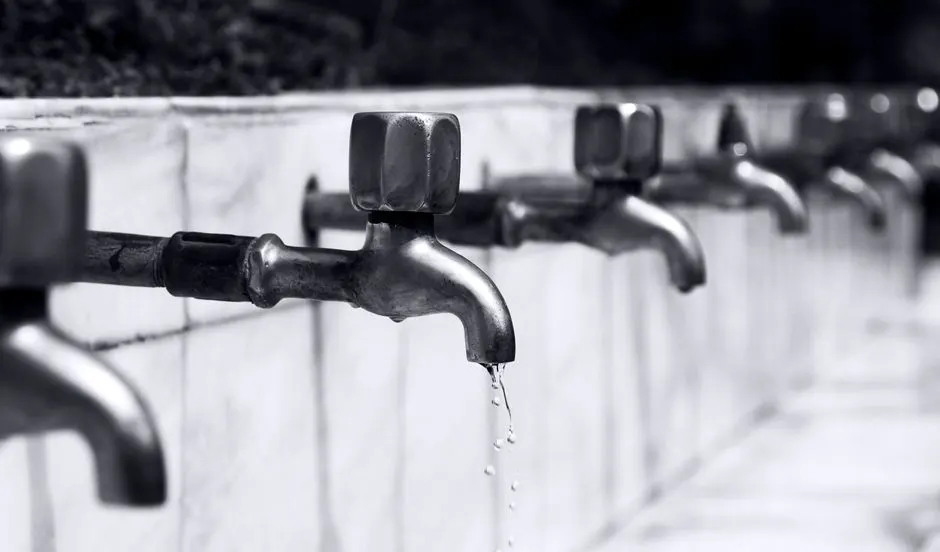
A hose bib is a frost-free sillcock with a long stem that reaches back into the wall. In Lakeland, the failure mode is not frost - it is the hose left attached all summer. The hose traps water in the stem, the sun heats it, and the pressure inside the stem climbs until the packing nut or the solder joint behind the wall gives. Disconnect your hoses when you are not using them. If a bib already drips from the handle, we replace it before it shears off inside the wall, which turns a $180 job into a $600 repair.
Irrigation main line
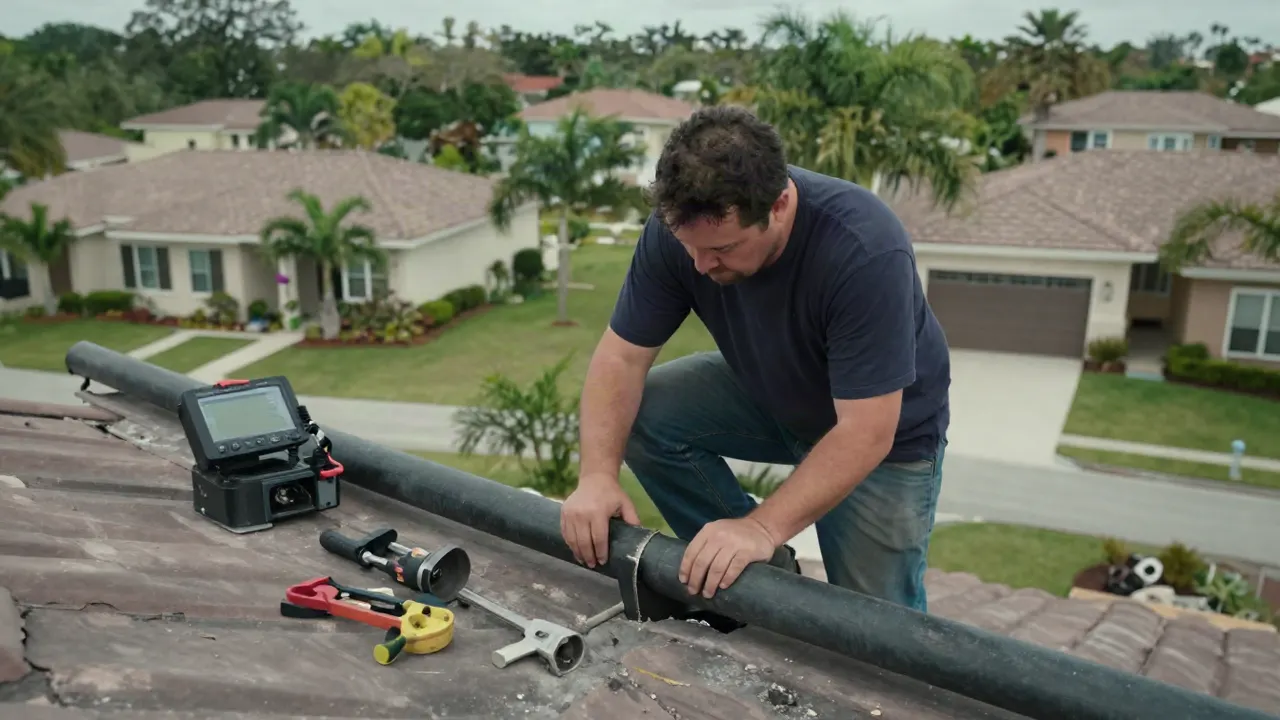
The main line from your meter to the valve box is usually PVC or poly. Heat makes PVC brittle, and a lawn mower or edger will crack it. Run each zone and watch the meter. If the meter spins with all zones off, you have a leak between the meter and the valves. We locate those with acoustic listening gear, which is the same equipment we use for leak detection Lakeland FL on indoor lines.
What plumbing problems happen in summer in Lakeland, Florida?
The plumbing problems that happen in summer in Lakeland, Florida are water heater tank failures, hose bib and irrigation breaks, pressure-related supply line bursts, and slow drains that finally clog. Here is what each one looks like and roughly what it costs to fix in 2026.
- Water heater tank leak: $1,200 to $2,400 installed for a standard 50-gallon tank, more if we have to bring the pan, expansion tank, and drain line up to current code.
- Hose bib replacement: $180 to $350 per bib, assuming the pipe behind the wall is sound.
- Irrigation main line repair: $250 to $700 depending on depth and how much line has to be replaced.
- Supply line burst from high pressure: $150 to $400 for the line, plus whatever water damage it caused. A burst line behind a cabinet can run $2,000 to $8,000 in drywall, flooring, and cabinet repair.
- Main drain clog: $150 to $350 for a standard cable or jetting call. If the line is bellied or root-invaded, we are talking about a bigger repair.
Notice the pattern. The cheap items on the prep list prevent the expensive items on this list. A $12 pressure gauge and a $90 pressure-reducing valve prevent a $4,000 water damage claim.
Water pressure summer heat Lakeland FL: what changes
Water pressure summer heat Lakeland FL homeowners should watch for is a rise of 10 to 20 PSI above your winter baseline, driven by thermal expansion in the supply line and by the city's own distribution pressure climbing as demand patterns shift. Lakeland's municipal supply runs 55 to 75 PSI at the meter in most neighborhoods, but we regularly measure 90 to 110 PSI at homes in the afternoon.
Anything above 80 PSI is out of spec for residential plumbing. CPVC, PEX, and copper are all rated for it, but the fittings and the appliance supply lines are not. A standard braided stainless supply line to a toilet or washing machine is rated for 80 PSI working pressure. Run it at 100 PSI for a summer and you are gambling.
The fix is a pressure-reducing valve (PRV) on the main line. Installed, a PRV runs $350 to $650 in 2026. It holds your house at 50 to 60 PSI regardless of what the city is doing. If you have never checked your pressure, do it this month. It takes two minutes and it is the cheapest insurance on this whole list.
One more thing: if your PRV is more than 15 years old, it has probably failed open. That is the most common cause of sudden high pressure we find. We test it, and if it is done, we replace it the same visit.
Common mistakes we see every June
The mistakes we see every June in Lakeland are almost always the same four, and every one of them turns a small repair into a big one.
- Leaving hoses connected. The hose traps hot water in the sillcock stem and the joint behind the wall fails. Disconnect when you are done watering.
- Turning the water heater up to compensate. If your hot water feels weak in summer, the problem is sediment or a failing dip tube, not the setpoint. Cranking a 120°F tank to 140°F accelerates scale and scalds kids.
- Ignoring a slow drain. A drain that takes 30 seconds longer to clear in May will be fully blocked by July. Summer cooking, guests, and more laundry push grease and hair through faster.
- Skipping the pressure check. Nine out of ten homeowners we visit have never measured their static pressure. It is the single number that predicts whether your supply lines survive the summer.
We also see homeowners run irrigation at 2 p.m., which is the worst time of day. You lose 30 to 50 percent of the water to evaporation, and you stress the system during peak heat. Run zones between 4 a.m. and 7 a.m.
When to call a professional
Call a professional when the water heater pan is wet, when a hose bib hisses behind the wall, when static pressure reads above 80 PSI, or when a drain backs up twice in the same month. Those four symptoms are the ones that do not fix themselves, and the ones where waiting costs real money.
At Lakeland Swancrest Plumbing, we run the full summer prep on your system in one visit: water heater flush, pressure test, hose bib inspection, irrigation zone check, and a look at your main drain. We tell you what is fine, what needs attention now, and what can wait until fall. No upsell, no scare tactics - just the list and the price.
If you are in an older neighborhood like drain cleaning in Dixieland Lakeland, where the housing stock runs from the 1920s through the 1960s, we also look at the original cast iron and galvanized lines while we are there. Those homes have specific summer issues that newer construction does not.
Frequently Asked Questions
How do I prepare my plumbing for summer in Lakeland FL?
Flush the water heater, test every outdoor spigot, run each irrigation zone for 5 minutes, check static water pressure with a gauge, and inspect under every sink. Do it in April or May, before daily highs hit 95°F. The whole list takes about 90 minutes.
What plumbing problems happen in summer in Lakeland, Florida?
The four most common are water heater tank leaks, hose bib and irrigation line breaks, supply line bursts from high pressure, and slow drains that finally clog. Heat, UV, and heavy irrigation demand drive all four. Most are preventable with a spring check.
Should I flush my water heater in summer in Lakeland FL?
Yes - flush it in late spring, before summer. Lakeland's hard water leaves 2 to 4 inches of sediment a year in a 50-gallon tank. Flushing yearly adds 3 to 5 years to the tank's life and keeps your hot water recovery fast during peak demand.
How does heat affect pipes in Lakeland, Florida?
Heat raises the temperature of the water in your pipes by 15°F to 20°F, which expands metal and PVC and stresses every joint. It also makes outdoor PVC brittle and drives up municipal supply pressure, which can push a home's static pressure above 80 PSI.
When should I schedule plumbing maintenance in Lakeland FL?
Schedule it in April or May, before the first sustained 95°F week. If you miss that window, do it in early September after the worst heat breaks. Twice-a-year maintenance - spring and fall - catches almost every issue before it becomes a repair.
Get help with plumbing in Lakeland
We handle the whole summer prep list in one visit, and we fix what we find the same day. Call Lakeland Swancrest Plumbing at (863) 445-7111 to schedule your pre-summer inspection before the June rush.